Jasper Johns, Three Flags, 1958
- What materials did Johns use in his flag paintings?
- What was he trying to achieve by representing such a common symbol?
(Source: cavetocanvas, via cavetocanvas)
click for details

Andy Warhol, Gold Marilyn Monroe, 1962
Things to think about when studying:
- This is a silkscreen - why is this medium important to Warhol’s work?
- How does Warhol undermine the public’s perception of Marilyn?
- What does this work say about consumerism?
(Source: cavetocanvas, via cavetocanvas)
click for details

Willem de Kooning, Woman I, 1952
Things to keep in mind while studying:
- How large was this painting? Why is that important to the Abstract Expressionist movement?
- Stylistically, how does de Kooning depict the woman? Be able to describe his brushwork and other formal qualities.
(Source: cavetocanvas, via cavetocanvas)
click for details


Diego Rivera, Detroit Industry (top image is the north wall, bottom image is the south wall), 1932-33. Located at the Detroit Institute of Arts.
(Source: cavetocanvas, via cavetocanvas)
click for details

Mark Rothko, Magenta, Black, Green on Orange, 1949
(Source: cavetocanvas, via cavetocanvas)
click for details
Jackson Pollock, Autumn Rhythm (Number 30), 1950
Things to think about while studying:
- Pollock was a part of what artistic movement?
- What was this type of painting called? (i.e. what’s the process Pollock used) Explain why Pollock’s painting method was important.
- Compare and contrast this to other mural-size abstractions (for example, Rothko)
(Source: cavetocanvas, via cavetocanvas)
click for details

Edward Hopper, Nighthawks, 1942
Things to think about when studying:
- Hopper was known for simple, quiet compositions - what formal qualities does he use to invoke the idea of alienation?
- Name two other Hopper paintings that have a similar theme of aloneness or abandonment
(Source: cavetocanvas, via cavetocanvas)
click for details

Pablo Picasso, Guernica, 1937
Things to think about when studying:
- Picasso painted this for what exhibition? What does it represent / what events inspired the work?
- Why is the black and white color palette significant?
(Source: cavetocanvas, via cavetocanvas)
click for details

Dorothea Lange, Migrant Mother, 1936
Things to think about when studying:
- Lange worked for what Depressive-era organization?
- This is an example of what kind of photography?
- How does this image raise social issues and concerns of the 1930s?
(Source: cavetocanvas, via cavetocanvas)
click for details

Frank Lloyd Wright, Fallingwater, 1935. Located in Mill Run, Pennsylvania.
Things to think about when studying:
- This is an example of what architectural style? Name at least 2 other buildings that Wright designed that use the same style.
- What is the architectural term for the porches that extend out and away from the main structure?
(Source: cavetocanvas, via cavetocanvas)
click for details


Meret Oppenheim, Object, 1936
Things to think about when studying:
- This sculpture is an example of what movement?
- How does the artist thwart your expectations of a simple object?
(Source: cavetocanvas, via cavetocanvas)
click for details
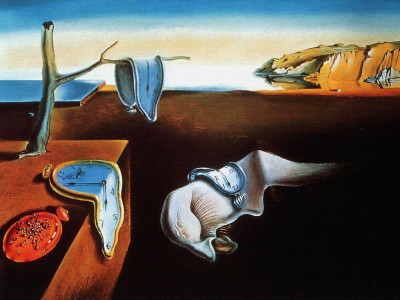
Salvador Dalí, The Persistence of Memory, 1931
(Source: cavetocanvas, via cavetocanvas)
click for details

Lou Mailou Jones, Ascent of Ethiopia, 1932
Things to keep in mind while studying:
- Jones was part of what cultural rebirth in New York during the 30s?
- What stylistic elements does Jones use to depict African American heritage?
(Source: cavetocanvas, via cavetocanvas)
click for details
Le Corbusier, Villa Savoye, 1929-30. Located in Poissy-sur-Seine, France.
Things to think about when studying:
- This is an example of what architectural style?
- What are the thin supports at the bottom of the house called?
- How does this architecture relate to 2D works made during the same time? What other architectural style did this draw on?
(Source: cavetocanvas, via cavetocanvas)